

The Life and Works of Don Kommit
Showing from September 16, 2026 - December 4, 2026
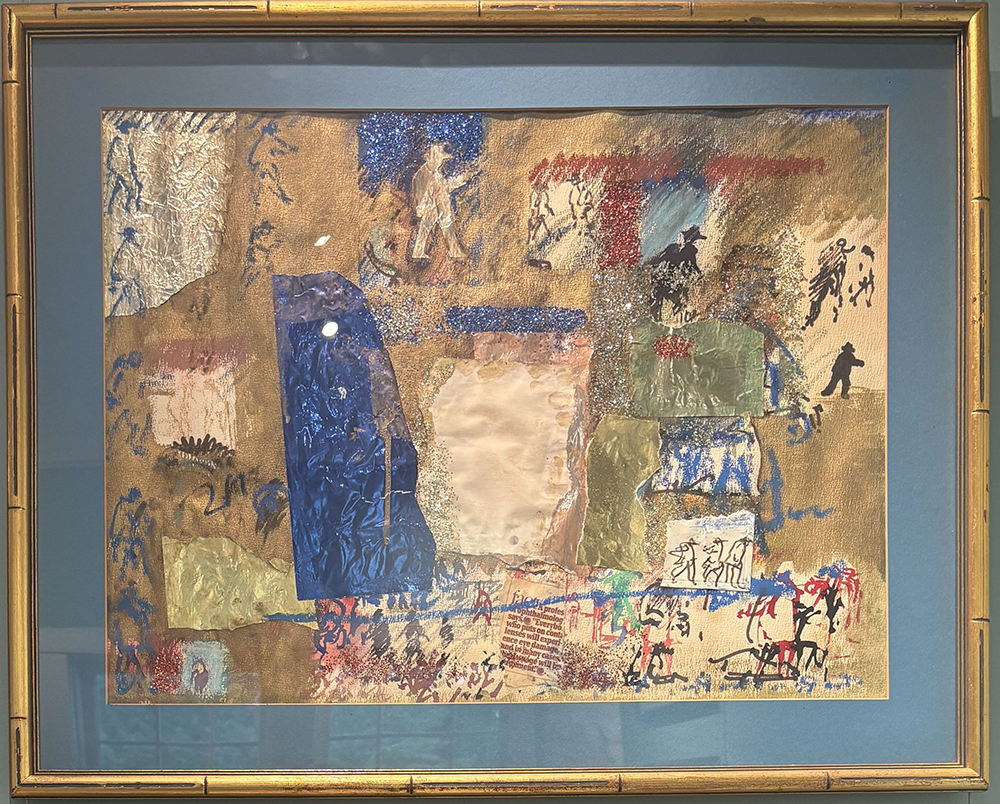
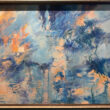
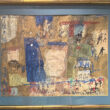
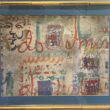
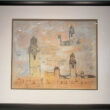
Artist and educator Don Kommit treated his hometown of Paterson as a modern-day Florence, seamlessly blending classical Humanist ideals with playful, Modernist aesthetics to chronicle the vibrant life of Passaic County.
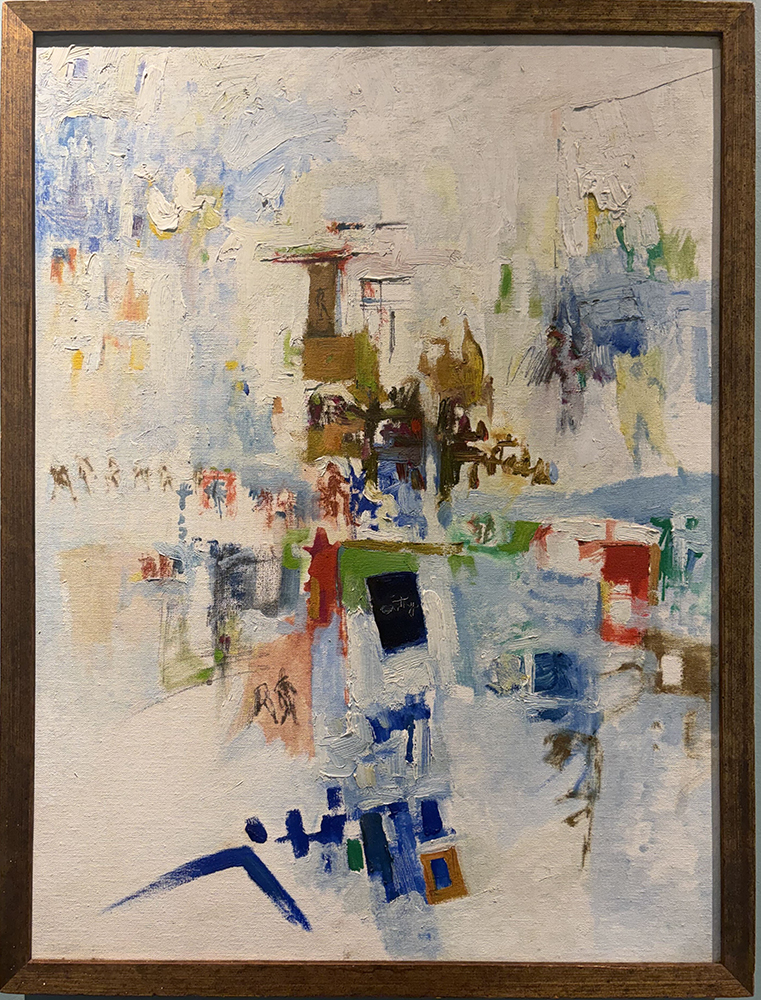
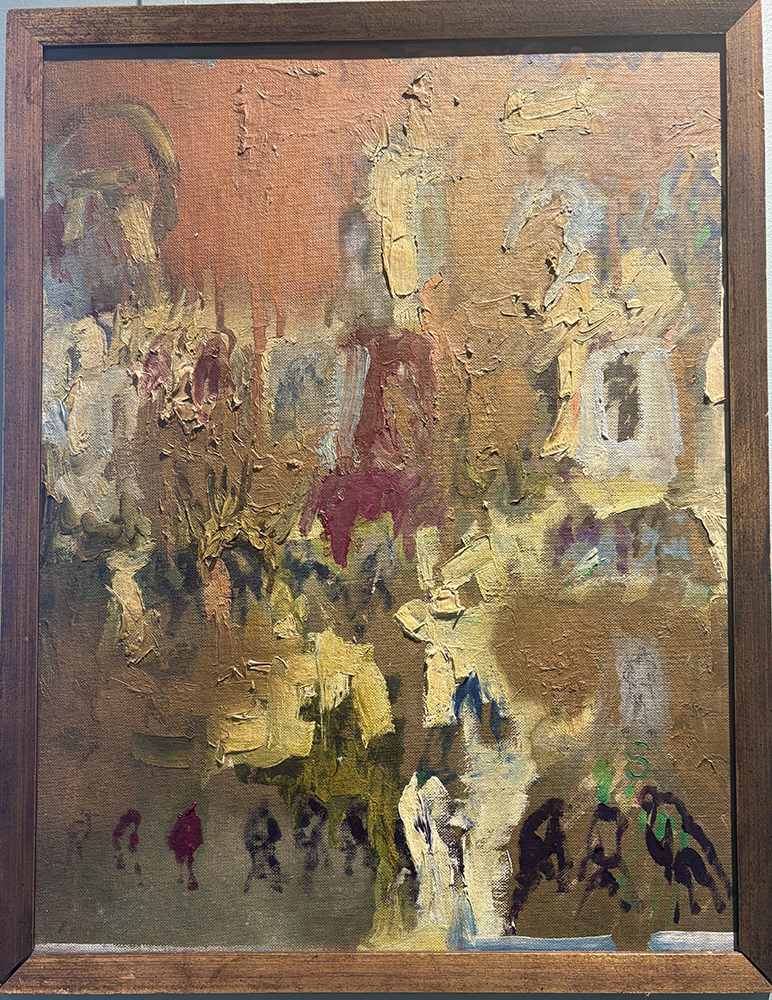
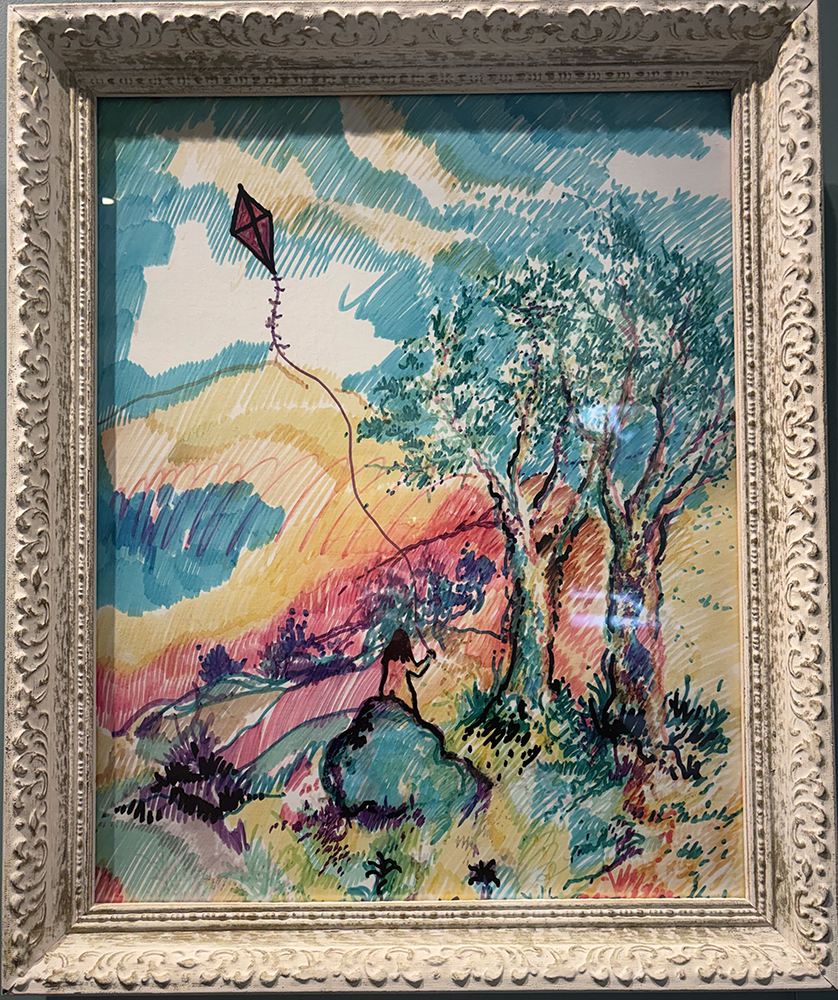
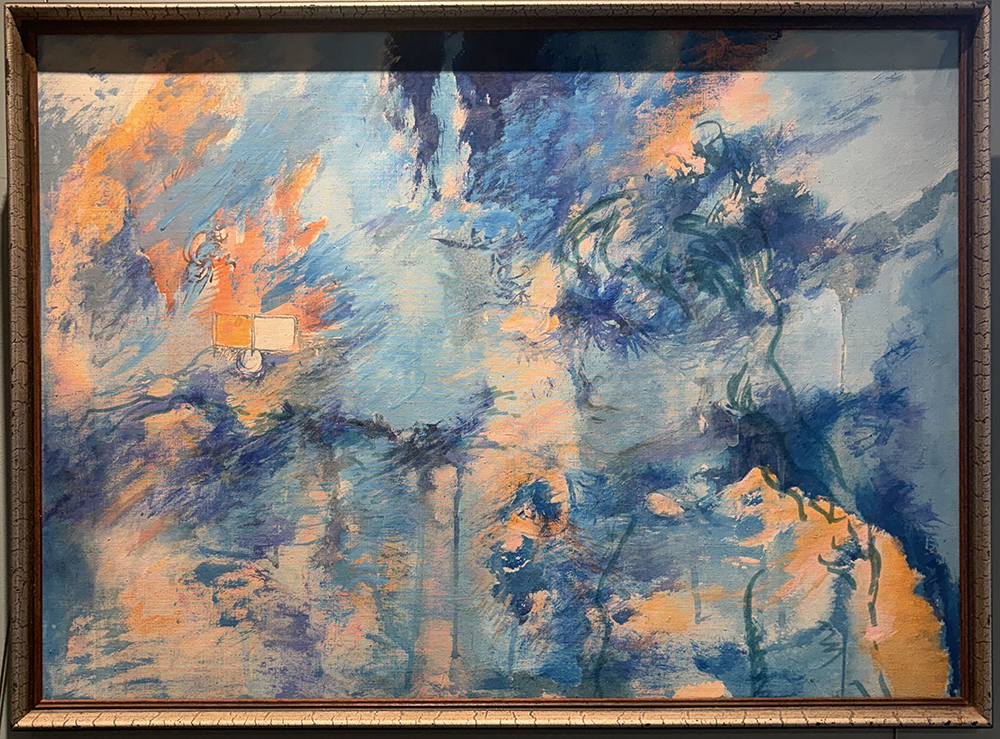
ABOUT THE ARTIST
Don Kommit
By Joesph Coco as seen in The Artistry of Don Kommit
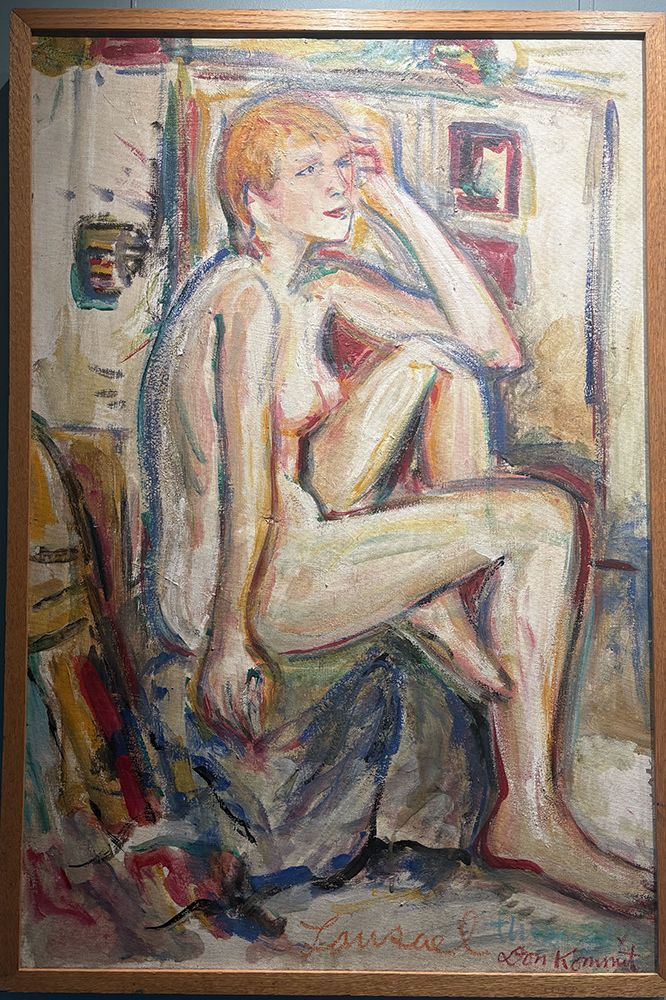
Kommit’s aesthetic was as devoted to Humanist ideals as he was to Modernist movements. He revered the arts of antiquity and could discuss Greek philosophy in his sleep. His William Paterson and Rutgers University training prepared him well to the cannon of Western Art. The Renaissance particularly resonated with him. He was an unfathomable scholar. I attest to this, having separated over 2,000 published books of all disciplines mixed in with 1,549 of his sketchbooks! Having been to Italy twice, he infused his life with Italian café culture, finding the kind of camaraderie and subjects to build an impressive oeuvre. Don’s hometown of Paterson was a substitute for Florence. The Comet Don Kommit blazed through Passaic County. This is the first book to present his artistry through the many themes he explored, in context with the Contemporary Period he came of age in, 1950 -75, and the Post-Modern Period, 1975 – 2000, in which he matured. Future writers, art and social historians will have the pleasure of discovering his place in time, through ground he explored throughout his career, which began in 1956 while in the marines through his last twenty-two years into the 21st Century.
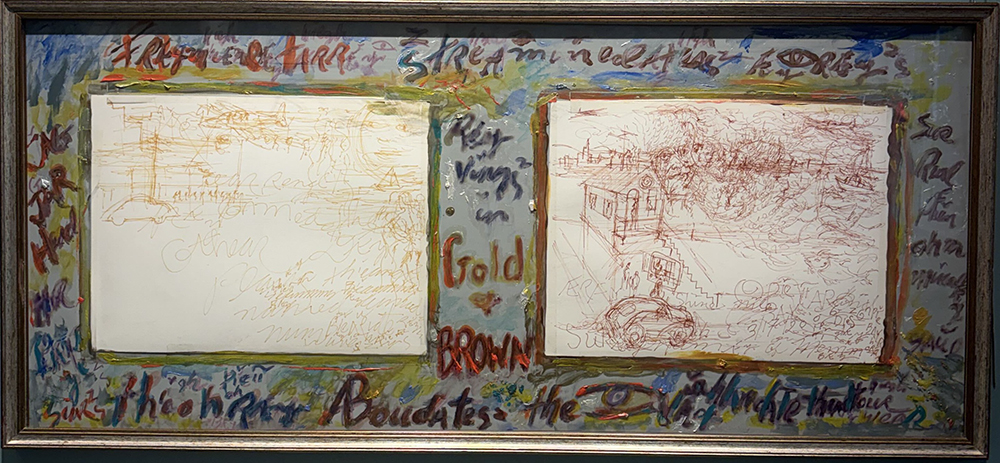
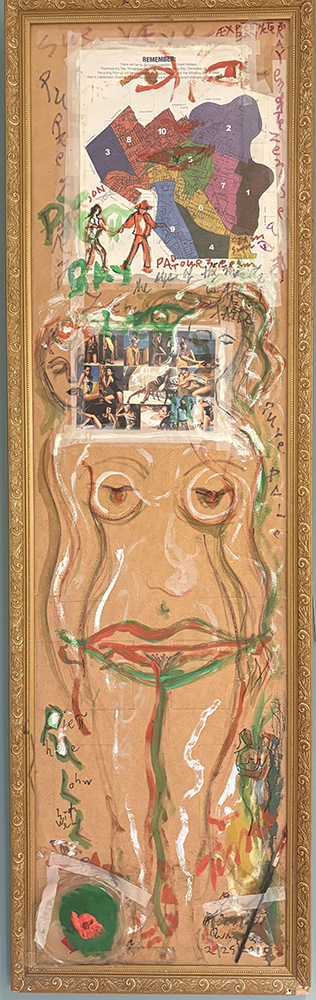
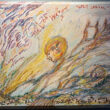
DJ’s tendency was playful. Whimsy lent itself to the Fantasy, Dada, and Surrealist idioms illustrating Kommit’s playful tendency. Developed in the 1920s, they are still alive and well today, especially prevalent in graphic / cinema arts. Notice how Don stretches figures, attenuates physiques. This Mannerist influence can be seen above in the late Renaissance artist Parmigianino’s painting “Madonna with the Long Neck.” Examples of his elongating faces are seen in the portraits of Tabetha McLeod and Melissa Lennon and Mecca. -left and right in this paragraph- Don understood how this shifted his tendency to capture a likeness toward Expressionism or looser representation. The Ash-Can artists of the Expressionist 1920s and 30s placed their subjects in dark urban tone settings. Kommit displays Paterson Street life in bright luminous colors, never depressing a scene. His inner-city student portraits, drawn in the classrooms he taught, throb with life: intimate, inquisitive, inventive.
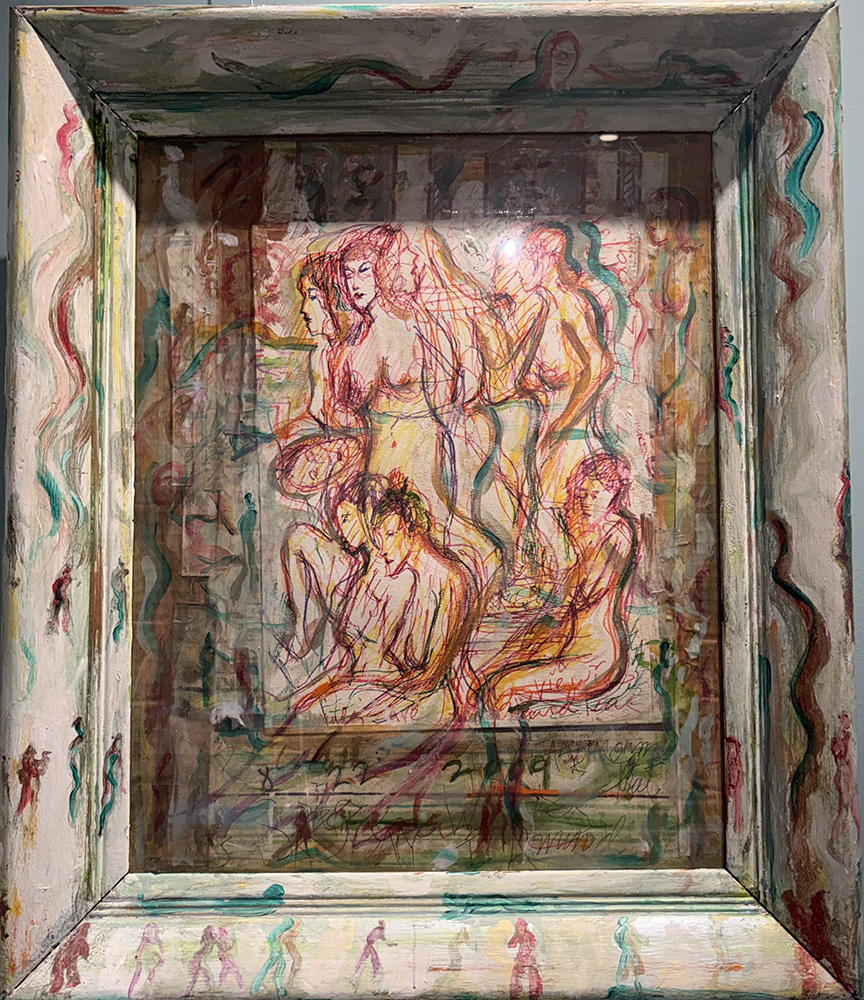
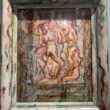
El Greco 1541-1614 is another example of Mannerism seen on the left. In this detail from the painting “The Burial of Count Orgaz” (1586), El Greco mannered or elongated his figures, interpreting the heavenly realm Count Orgaz was entering. This early Baroque style helped artists navigate religious themes into a more ‘modern’ approach, pre-dating Surrealism by 350 years. The thin figures of Kommit’s Women – Green Frame, at right, is Don’s way of alluding to an ethereal place. The women seem to be dancing in a spiritual realm, not just an earthly room. El Greco depicts the light of the heavens, making the clothes appear transparent, as if a spiritual light is entering through them, making the figures appear translucent. Light is not simply spotlighting the scene but emanating. Don does the same, using the white of his drawing paper to infuse the light of the room as if light is shining from the figures. Depicting the figures naked is Kommit’s way of eliminating artifice, getting to the heart of humans as divine. Don well understood that the classical Greek artists were all about infusing their earthly figures to match the divinity of the Gods and Goddesses. This artful philosophical connection pre-dates Renaissance Humanism by 2,000 years.
A third example of Mannerist technique is the large oil on canvas entitled “The Last Supper,” 1592-94. Here Tintoretto, 1518-1594, shows two dimensions using lamp light in the room to merge mystical figures (floating in that light) at the precise moment Jesus is blessing bread and wine. This communion is at the heart of a Christian mass, allowing the participant to take in the spirit of Christ. I am sure that filmmaker Stephen Spielberg has been influenced by Tintoretto’s masterpiece, (a detail seen at left). In the first Indiana Jones film, when the Arc Of The Covenant is opened, spirits fly through the room. Don’s way of showing that spirits share the same space that humans do, that spirit life moves freely through the world, is drawn with searching lines, agitating the surface, showing multi-dimensions. In Kommit’s “Three-Graces,” body, mind, spirit, are depicted multi-dimensionally in one portrait, portraying the essence of humankind.
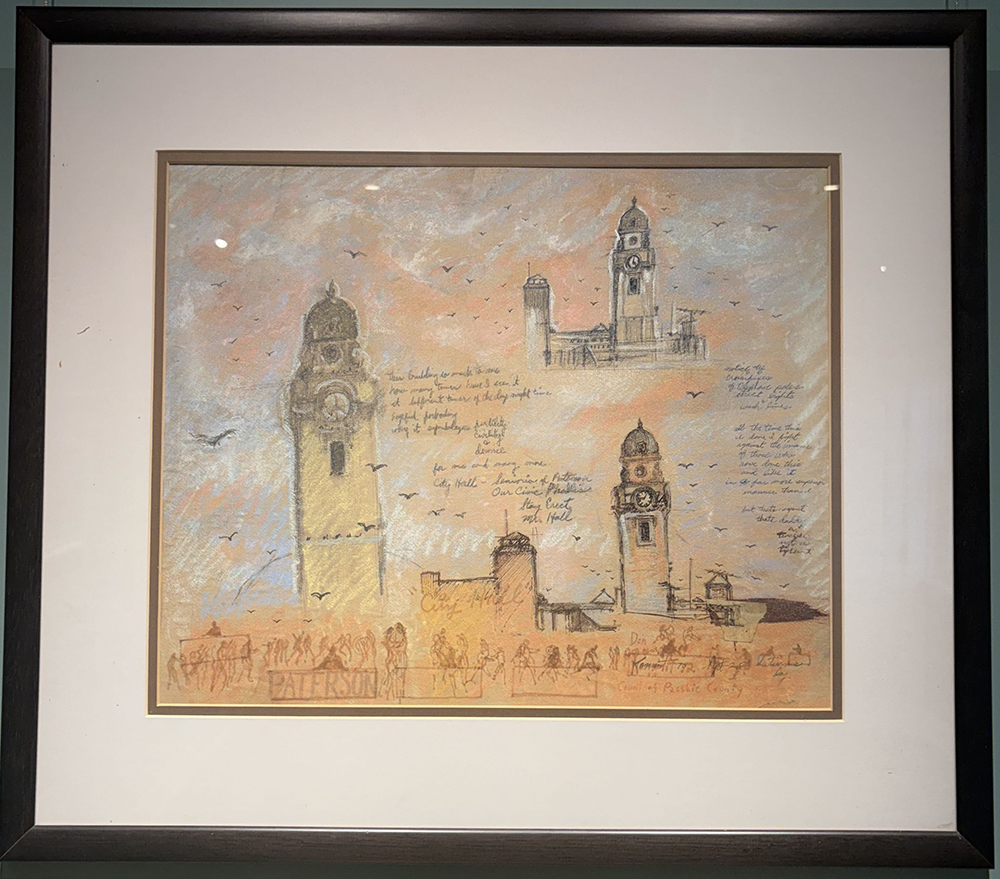
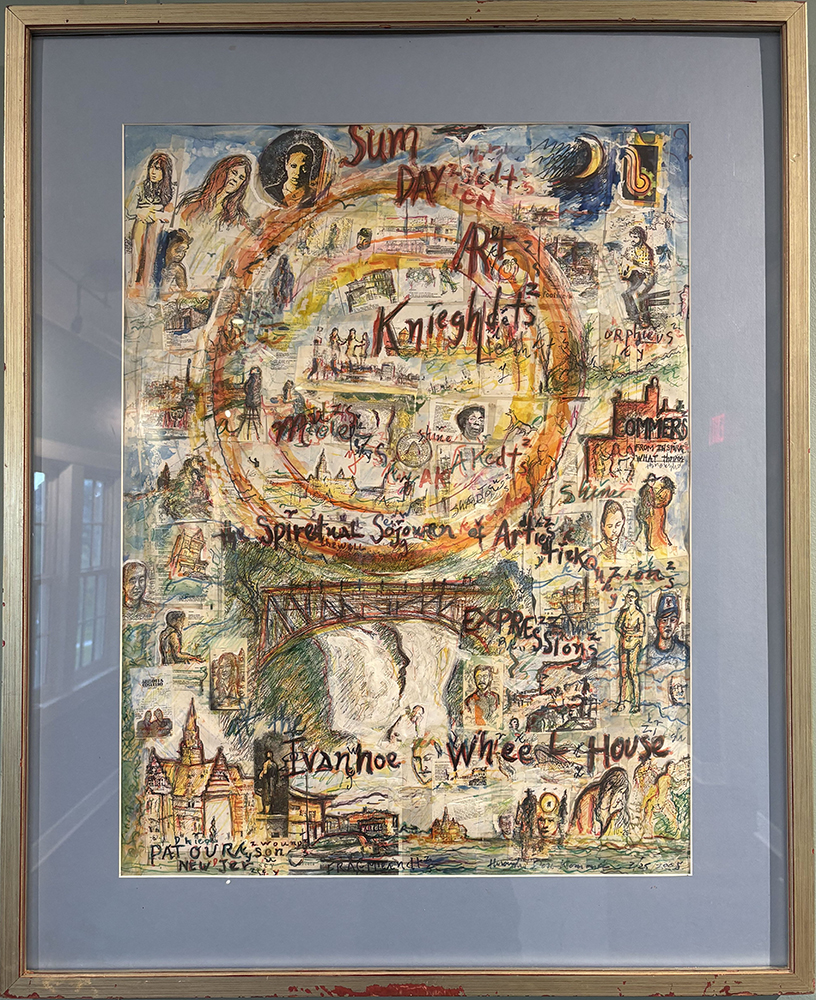
Paterson was a backdrop for Kommit’s way of expressing the joy he saw in his city’s version of the American melting pot. Under his watch, drawings and poems simmered, amused and delighted, expressing the multi-cultural potpourri he experienced. Don did not complain about urban blight or pollution; rather, he focused on the dynamism around him. Kommit was a walking Wikipedia® of Paterson history. While with him on errand runs, which included a requisite stop to any one of his many favorite cafés, a walking history tour was included: the architecture, the businesses they housed, the many Gaetano Federici’s statues, mills, unions, or images of America’s Founding Fathers, who organized the nation’s first industrial complex, “The Society of Useful Manufacturers” – S.U.M. If you see the word “Paterson” in his drawings and poetry, you will see his clever word play, spelling it as “Pater-SUM” as well as “Pater-swoon.” Perpetually finding two ways to use a word, you can see how Don tips his hat to those Founders. His enthusiasm swoons over Paterson’s Great Falls, the raceways powering the many train and textile mills, Hinchliffe Stadium, and John Holland’s submarines launched in the Passaic River, etc. Kommit would be the first to exclaim that “the Passaic” was America’s first polluted river, then wryly add, the first river in America to be cleaned up in the 1970s. Paterson and the mighty Passaic River were Don’s muses, his playground. Don rode his VW Bug like a chariot. While perusing this book, notice how often the “magic bug” appears in his drawings.
Ever operating under a beleaguered budget, the Paterson Museum manages to present Passaic County’s Capital, preserving its storied history. Considering its hampered assets, the Museum presents educational exhibits, fine art shows, and poetry events. Ever since Catholina Lambert* sold much of his Impressionist Collection in the 1920s, that art became the stars of The Metropolitan Museum’s modern wing. Since then, Paterson has always drifted behind in cultural prestige, as Paterson’s industrial might shifted after WW-II globalization. The famous people most associated with Paterson overshadow the city’s luminaries: Alexander Hamilton, sculptor Gaetano Federici, poet Allen Ginsburg, comedian Lou Costello, baseball’s Larry Dolby. Perhaps it is time to add Kommit to the Pantheon. Leaving 1,549 sketchbooks, -approximately 125,000 drawings rendered in them- is likely a Guinness World Record. Consider his 50+ year legacy as an educator – 1963 through 2013. He has overseen approximately 20,000 students, in large part because he spent 40 years as a substitute teacher, typically with students for one day or one week. After perusing Kommit’s sketchbooks during 2021 through 25, I assess there are 20,000 images of students drawn directly from the classrooms he presided over. Most of these are immigrant children making Paterson their home and the United States their nation. Such is Don’s gift to Paterson and the world.
Artist Statement
Early works:
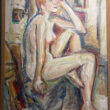
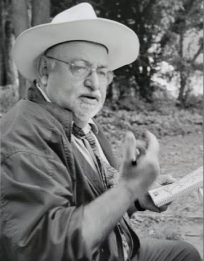
Don Kommit’s executive functioning was a laser-focused work ethic, ever inquisitive, drawing every day of his life. This paid off in spades with portraits, shifting from realistic renderings to whimsical. Don captured the likeness of a face, with an accent on its uniqueness, quickly, and effortlessly. He could summon an exact touch, working with a jeweler’s precision. Precise is what seems to be operating through DJ’s seemingly imprecise methods. He conjured images through searching lines, following an invisible thread of “the now.” He stitched or sketched, as he would remind me, just as a tailor fashions pieces of cloth into a garment. Don’s images stitch rhythmic marks and reinforce accents into dynamic shifts of many colors. He also knew the art of dressing. As seen in the photo on the right, he was never without a jacket. He had a fabulous collection of ties stuffed into two dresser drawers. He never seemed to wear the same one, twice.
Abstract:
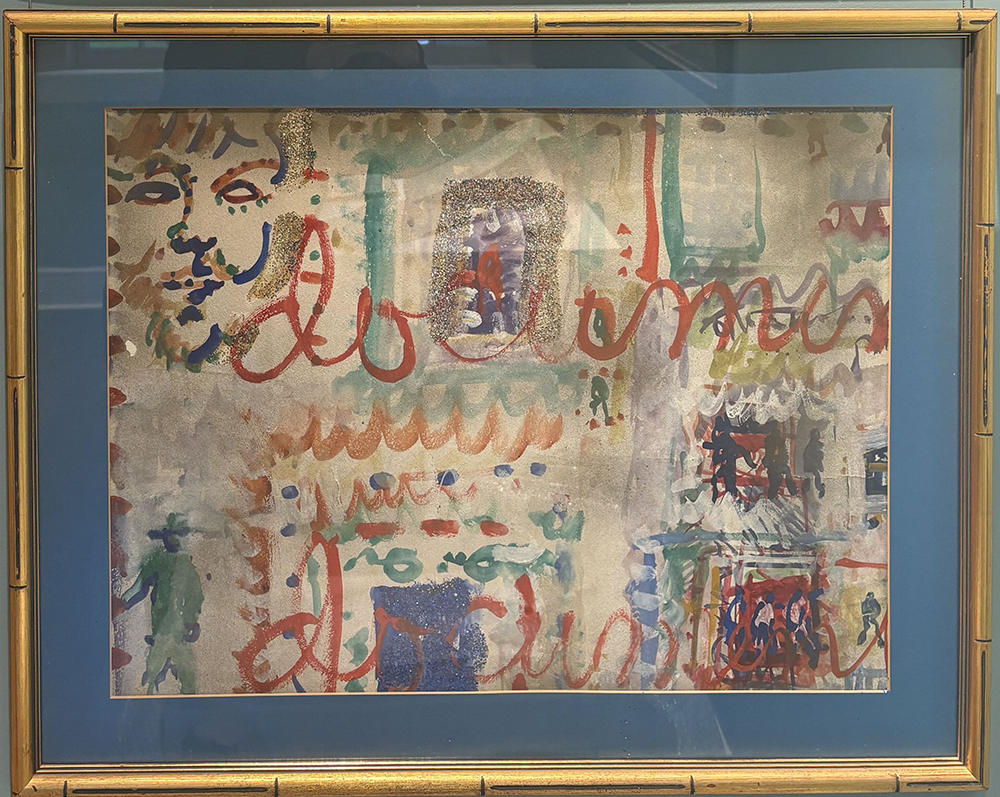
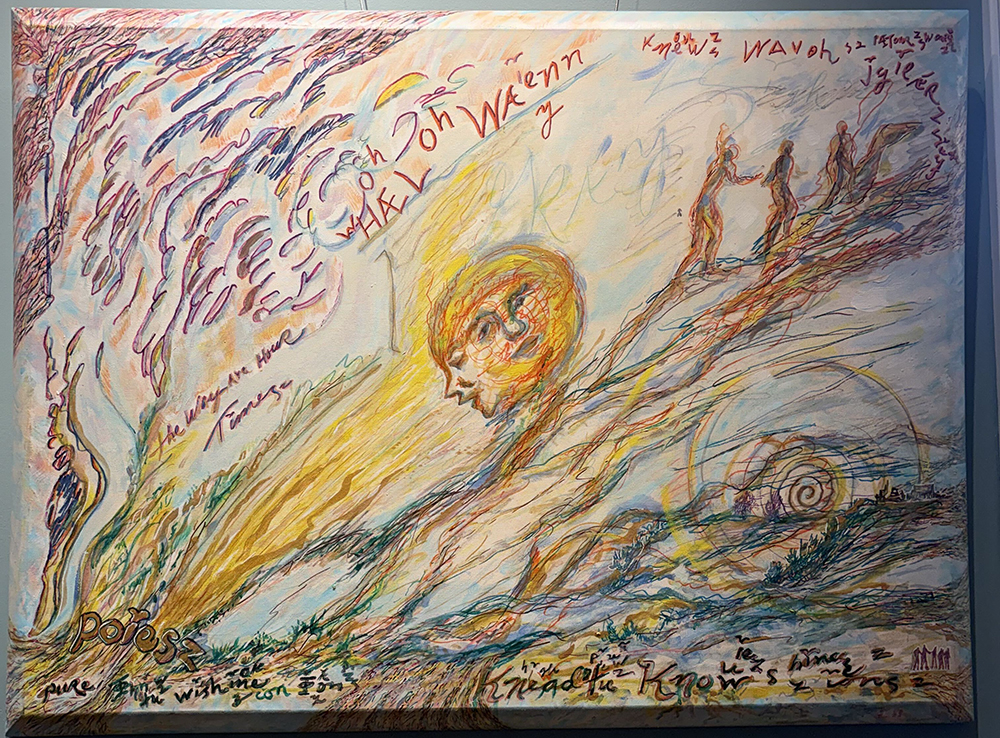
Once a drawing implement was in hand, Don was interested in capturing something before him or something he could not explain, nor define, yet only conjure. It was difficult for Kommit to end up with a non-objective result, for he was rooted in a Surreal and Fantasy aesthetic, ever exploring fanciful narratives. Watercolor was his medium of choice when composing an abstraction. Pencils, pens and markers were too inclined to veer him toward representing known portraits, places, and poems. Pens are synonymous with writing words and, since Don was always wordsmithing his images, his lines would shift from the contour of a form to phrases, and back again, while seamlessly changing colors or mediums. Don may have seemed to be in a “world of his own” while drawing, yet the places he was adventuring to in his imagination were all about capturing the place he was in and people he was surrounded by.
Surrealism:
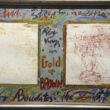
Kommit blurs the line between Fantasy and Surrealism. He was the embodiment of both idioms, as seen in this section. A Dalí disciple, Don’s aesthetic was Dadaist merging wordplay into fanciful images. Salvador Dalí transformed realism into surrealism, using the tenant of the absurd as his magic wand. Don mastered realism only as it pertained to portraits, often with stunning accuracy, mirroring his sense of the absurd. Kommit’s surrealism merged semiotics* with writing that runs through so many of his drawings. Don would often start writing a phrase, or just letters that trailed off into images. Doors and walls were not out of bounds for Don’s musings.
Futurism:
Don’s drawing is an excellent example of Futurism, the early 20th Century Idiom of Modern Art, 1850-1950. Futurismo forms the foundation of Dada in the 1920s, then Surrealism in the 1930s. Commencing in Italy, the movement portrayed the dynamism of industrialism. Dynamism is an idiom of Futurism using fragmented forms, vibrant color and motion-based techniques in painting and sculpture. The worldwide impact of speed from the advent of trains in the mid-1800s, leading to planes, then automobiles contributed to the formation of Futurism, with an aesthetic focused on the energy at which urban life was affected by such mobilization. With the impact of electricity and its manifestations in machinery, then communication: telegraphy, to phones, kinescope to cinema, and you can see how artists like Kommit continued to be fascinated by artists like Umberto Boccioni, 1882-1916, a principal Futurist.